Kuwait E-Commerce Advertising & Pricing Rules
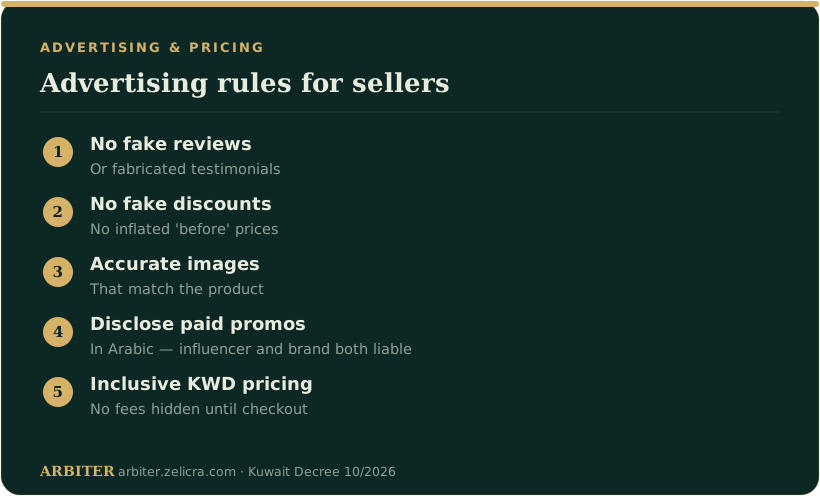
Decree 10/2026 prohibits misleading advertising for Kuwait online sellers: no fake reviews, fabricated testimonials, deceptive "fake discount" pricing, or images that misrepresent the product. Prices must be shown in KWD, fully inclusive, with no hidden fees. Paid influencer promotions must be clearly disclosed in Arabic, and MOCI can order non-compliant ads removed.
Advertising and pricing are where many Kuwait online sellers unknowingly cross the line. The Decree targets the exact tactics that erode consumer trust — inflated "before" prices, invented reviews, and undisclosed sponsorships. This guide explains the advertising and pricing rules under Decree 10/2026 and how to keep your marketing compliant.
No misleading claims or fake reviews
The Decree prohibits misleading claims, fake reviews, and fabricated testimonials. Product images must accurately represent the item being sold, and descriptions must be truthful and complete. MOCI has the authority to order the removal of non-compliant advertisements and to penalise the responsible parties — whether that is the seller, the advertiser, or both.
No deceptive pricing
Deceptive pricing practices are specifically targeted — including inflating a price before applying a "discount" to manufacture a fake saving. Prices must be shown in Kuwaiti Dinar and be fully inclusive of taxes and fees, with no charges hidden until checkout. If you advertise a discount, the reference price must be genuine.
Advertising Practices That Violate the Law
- Fake or incentivised reviews and fabricated testimonials.
- "Was 20 KWD, now 10 KWD" claims where the item was never sold at 20.
- Images or specs that misrepresent the product.
- Undisclosed paid influencer promotions.
- Fees revealed only at the final checkout step.
Influencer promotions must be disclosed
Any paid promotion — whether compensated in money, free products, commission, or other benefit — must be clearly and conspicuously labelled as an advertisement, in Arabic, where the consumer will see it before engaging with the content. Both the influencer and the brand are liable. For the full set of influencer duties, see the influencer compliance guide.
Is Your Marketing Compliant?
Check your advertising, pricing, and disclosures against all 18 requirements — free, five minutes, no signup.
Run the Free Checklist →Keeping advertising compliant
- Remove fake or incentivised reviews and never fabricate testimonials.
- Only advertise discounts against genuine prior prices.
- Show fully inclusive KWD pricing with no surprise fees — see the payments and pricing guide.
- Ensure every paid promotion is disclosed in Arabic by both influencer and brand.
- Use accurate product images and honest delivery-time claims.
Honest advertising is one of the 18 obligations that make up compliance, and it interacts closely with pricing, influencers, and returns. For the complete map, read the Complete Guide to Kuwait Decree 10/2026.
Frequently Asked Questions
What advertising is banned under Kuwait Decree 10/2026?
Misleading claims, fake reviews, fabricated testimonials, deceptive 'fake discount' pricing, and images that misrepresent the product are prohibited, and MOCI can order such ads removed.
Are fake discounts illegal in Kuwait?
Yes. Inflating a price before applying a discount to manufacture a fake saving is a deceptive pricing practice prohibited by the Decree; discounts must reference genuine prior prices.
Do influencers have to disclose paid promotions?
Yes. Paid promotions must be clearly labelled as advertising in Arabic before the consumer engages, and both the influencer and the brand are liable for non-disclosure.
How must prices be displayed?
In Kuwaiti Dinar, fully inclusive of taxes and fees, with no charges hidden until checkout and no unapproved electronic-payment surcharges.