Kuwait vs UAE vs Saudi Arabia: GCC E-Commerce Law Compared
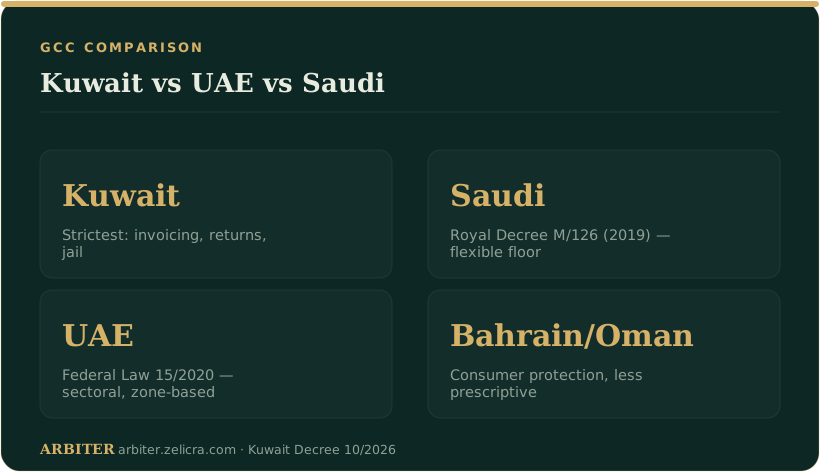
Kuwait's Decree 10/2026 is the most prescriptive e-commerce law in the GCC. Saudi Arabia's E-Commerce Law (Royal Decree M/126, 2019) and the UAE's Consumer Protection Law (Federal Law No. 15 of 2020) set disclosure and consumer-protection floors but leave more to the seller's own terms. Kuwait goes further, specifying operational details such as Arabic invoicing, Hijri dates, and 14-day returns.
The Gulf is tightening e-commerce regulation, but not uniformly. A seller operating across Kuwait, Saudi Arabia, and the UAE faces three different regulatory philosophies. Understanding where Kuwait sits — and why it is the strictest — helps regional sellers prioritise. This comparison summarises the three frameworks and what they mean in practice.
Kuwait: the most prescriptive framework
Kuwait's Digital Commerce Law (Amiri Decree-Law No. 10 of 2026) does not just state objectives; it specifies methods. It mandates Arabic invoicing with Hijri dates, a 14-day return window, five-year record retention, influencer disclosure, CBK-compliant payments, and MOCI registration for all sellers — including social-commerce accounts. Non-compliance carries fines of 1,000–10,000 KWD per violation, imprisonment, and store closure. For the full breakdown, see the complete guide.
Saudi Arabia: a flexible floor
Saudi Arabia introduced its E-Commerce Law by Royal Decree No. M/126 in 2019 (in effect since October 2019, with executive regulations in 2020). It establishes disclosure requirements and consumer return rights but relies more heavily on the provider's own terms of service, functioning as a regulatory floor rather than a prescriptive ceiling. Sellers get more latitude in how they implement obligations.
UAE: a sectoral, zone-based approach
The UAE regulates through Federal Law No. 15 of 2020 on Consumer Protection, supplemented by data-protection and financial frameworks and by economic-zone-specific rules (such as DIFC and ADGM). This produces a more fragmented but flexible landscape. Notably, the UAE does not mandate Arabic-only invoicing or specify influencer documentation to the same degree as Kuwait.
Side-by-side: what differs most
- Arabic invoicing / Hijri dates: mandatory in Kuwait; not required to the same degree in Saudi or the UAE.
- Return window: Kuwait fixes a 14-day right; Saudi and the UAE provide return rights with more implementation flexibility.
- Influencer rules: Kuwait is explicit (contracts, disclosure, five-year records); others are less prescriptive.
- Enforcement: Kuwait combines per-violation fines, imprisonment, and closure — among the toughest in the region.
Selling Across the Gulf? Start With Kuwait
Kuwait is the strictest market — meet its bar and you are ahead elsewhere. Check your compliance free in five minutes.
Run the Free Checklist →Because Kuwait sets the highest operational bar, sellers who build to Kuwait's standard are well positioned across the GCC. If you sell into Kuwait from another market, see our guide for international sellers. This analysis draws on the broader assessment published in NeLi (New Economy & Legal Infrastructure Center).
Frequently Asked Questions
Which GCC country has the strictest e-commerce law?
Kuwait. Decree 10/2026 is the most prescriptive, specifying operational details like Arabic invoicing with Hijri dates, a fixed 14-day return window, influencer disclosure, and five-year retention.
What is Saudi Arabia's e-commerce law?
The Saudi E-Commerce Law, issued by Royal Decree No. M/126 in 2019 (effective October 2019), sets disclosure and return requirements but relies more on the provider's own terms as a flexible floor.
How does the UAE regulate e-commerce?
Mainly through Federal Law No. 15 of 2020 on Consumer Protection, alongside data and financial frameworks and economic-zone rules — a flexible, sectoral approach without Kuwait-style Arabic-only invoicing.
If I comply with Kuwait, am I compliant across the GCC?
Kuwait sets the highest operational bar, so building to its standard positions you well regionally, but each market still has its own registration and specifics you must check.