Selling to Kuwait From Abroad: Decree 10/2026 for International Sellers
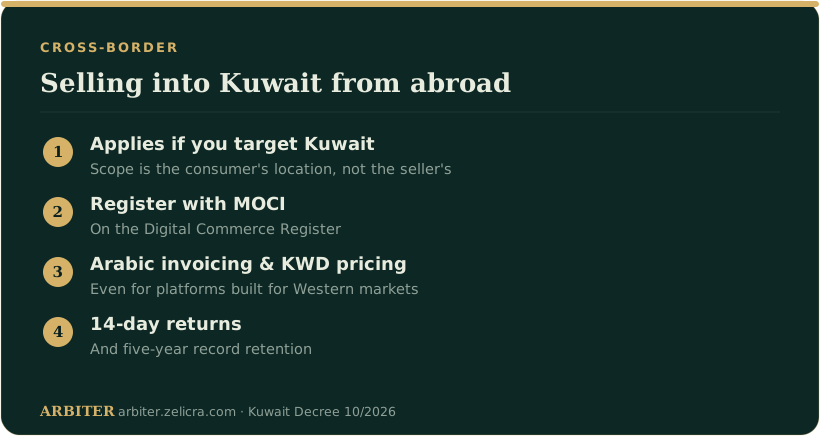
Yes — Decree 10/2026 applies to international sellers who target consumers in Kuwait, not just Kuwait-based businesses. If you advertise or sell to Kuwaiti customers, you are expected to meet the same core obligations: MOCI registration, Arabic invoicing, transparent KWD pricing, a 14-day return policy, and five-year record retention. Selling from abroad does not exempt you from the law.
A common misconception among overseas merchants is that Kuwait's Digital Commerce Law only binds businesses physically located in Kuwait. It does not. The Decree is framed around the consumer's location: if you direct your offering at customers in Kuwait, you fall within scope. This guide explains what international and cross-border sellers need to do to keep serving the Kuwaiti market compliantly.
Does Decree 10/2026 apply to sellers outside Kuwait?
Yes. The law applies to all digital commercial activity directed at consumers in the State of Kuwait, regardless of where the seller is established. That includes standalone e-commerce sites, marketplace sellers shipping into Kuwait, and social-commerce accounts serving Kuwaiti buyers. The test is who you are selling to, not where you are based.
The obligations that matter most for international sellers
- Registration: businesses serving Kuwaiti consumers are expected to register with MOCI. See the MOCI registration guide.
- Arabic invoicing: transactions need an Arabic (or bilingual) invoice with the required fields — a real change for platforms built for Western markets. See the Arabic invoicing guide.
- KWD pricing: prices should be shown transparently and inclusively in Kuwaiti Dinar.
- 14-day returns: the mandatory return window and refund-to-original-method rule apply to your Kuwaiti orders. See the return policy guide.
- Record retention: keep transaction records for five years and be ready to produce them.
The compliance fragmentation challenge
For international platforms, Kuwait's prescriptiveness adds to a wider GCC trend: each market increasingly demands jurisdiction-specific configuration rather than a one-size-fits-all setup. Arabic invoicing, Kuwait-specific return rules, and MOCI registration cannot simply be inherited from a global template. Sellers active across the Gulf should expect to maintain per-market settings — see our comparison of Kuwait, UAE and Saudi e-commerce law.
See If Your Store Meets Kuwait's Rules
Check your international store against all 18 Kuwait requirements — free, five minutes, no signup.
Run the Free Checklist →Cross-border data transfers
Serving Kuwaiti customers from abroad also means transferring their personal data across borders. The Decree subjects such transfers to conditions to be defined by MOCI, so international sellers should track exactly where Kuwaiti customer data is processed and stored — see the data-protection guide.
The bottom line for overseas merchants: if Kuwait is a market you value, treat Decree 10/2026 as a market-entry requirement. Start with the complete guide and prioritise registration, Arabic invoicing, and returns.
Frequently Asked Questions
Does Kuwait's Decree 10/2026 apply to sellers based abroad?
Yes. The law applies to any digital commerce directed at consumers in Kuwait, regardless of where the seller is established. The test is who you sell to, not where you are located.
Do international sellers need to issue Arabic invoices?
Yes. Transactions with Kuwaiti consumers require an Arabic or bilingual invoice with the mandated fields, which often means changing checkout systems built for Western markets.
Do the 14-day returns apply to cross-border orders?
Yes. Orders shipped to Kuwaiti consumers are subject to the 14-day return right and refund-to-original-method rule, independent of the seller's home-country norms.
Do international sellers have to register with MOCI?
Businesses serving Kuwaiti consumers are expected to register with MOCI as digital commerce operators; selling from abroad does not remove the registration obligation.